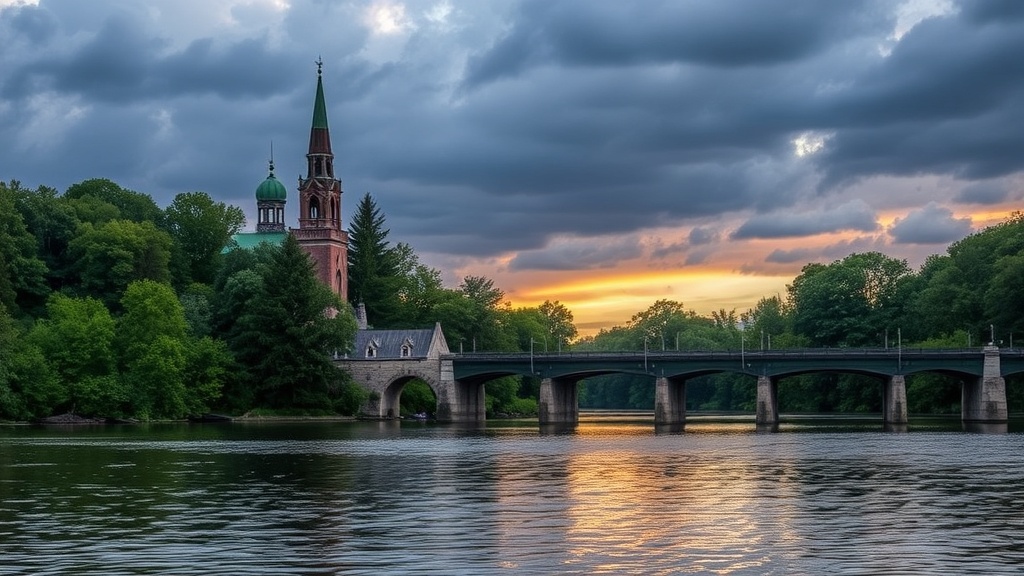
Discovering Buckingham: A Hidden Gem on the Ottawa River

This post covers what makes Buckingham worth visiting — from riverside trails and local eateries to its distinct Franco-Ontarian heritage. You'll get practical recommendations on where to eat, what to see, and how to spend a day exploring this Ottawa River community that most tourists overlook entirely.
Where exactly is Buckingham located?
Buckingham sits on the north shore of the Ottawa River, about 40 kilometres northeast of Parliament Hill. It's part of the City of Gatineau now — merged back in 2002 — but locals still treat it like its own place. (And honestly, it feels like it.) The community sits at the confluence of the Ottawa and Lièvre Rivers, which explains why you'll see so many kayaks and fishing boats around.
Getting here is straightforward. Take Autoroute 50 east from Gatineau, exit at Boulevard de la Gappe, and follow the signs. The drive takes roughly 35 minutes from downtown Ottawa — less if traffic cooperates. There's also a Société de transport de l'Outaouais (STO) bus route that connects Buckingham to Ottawa-Gatineau, though service is limited on weekends.
The geography shaped everything here. The Ottawa River made Buckingham a logging hub in the 1800s. Timber rafts floated down from the north, stopping at the massive Maclaren Mill complex that still dominates the waterfront. That industrial past left behind red-brick buildings, workers' cottages, and a downtown that feels more lived-in than manufactured.
What is there to do in Buckingham Quebec?
More than you'd expect from a town this size. The riverfront defines the experience here — whether you're into paddling, cycling, or just watching the water roll by with a coffee in hand.
Parc des Cèdres sits right where the Lièvre meets the Ottawa. It's got a boat launch, picnic tables, and a small beach that fills up fast on July weekends. Locals bring their own chairs and set up for the day. The swimming isn't world-class — it's a river, not a Caribbean resort — but on a 30-degree August afternoon, you'll take it.
The Sentier L'Île-de-la-Commune trail network starts here too. It's part of the Trans Canada Trail system, running east toward Plaisance National Park. You can bike it, walk it, or snowshoe it in winter. The path hugs the river for long stretches — herons, turtles, the occasional beaver. Morning is best. You'll have it mostly to yourself before 9 AM.
Downtown Buckingham runs along Rue Maclaren — named after the mill family that built this place. The street mixes heritage architecture with practical businesses: a proper bakery, a hardware store that's been around since 1947, a handful of cafés that know how to pull a decent espresso. Nothing fancy. That's the point.
Here's a breakdown of what to expect:
| Activity | Best For | Season | Cost |
|---|---|---|---|
| Parc des Cèdres beach | Families, swimming | June–August | Free |
| Sentier L'Île-de-la-Commune | Cycling, walking | Year-round | Free |
| Kayaking Ottawa River | Adventure seekers | May–September | $40–80 rental |
| Heritage walking tour | History buffs | Year-round | Free (self-guided) |
| Marché de Buckingham | Local food, crafts | Saturday mornings (summer) | Free entry |
Where should you eat in Buckingham?
The food scene punches above its weight. You're not finding molecular gastronomy here — what you get is honest cooking, often with Quebec ingredients, served by people who remember your order.
La Maison de l'Omelette on Avenue Georges draws weekend crowds from Ottawa and Montreal both. The omelettes are massive — three-egg monsters stuffed with local cheese, mushrooms from nearby farms, ham from across the river in Ontario. The potatoes come crispy. The coffee comes refilled without asking. Show up before 10 AM on Saturday or plan to wait.
For lunch, Pub Le Buck occupies a converted heritage building on Rue Maclaren. The patio faces the river. The burger is hand-formed, the poutine uses St-Albert cheese curds (the real squeaky stuff), and the beer list includes local Gatineau breweries like Broadhead and Tuque de Broue. It's casual. Families come. So do solo diners with laptops.
That said — don't skip the bakeries. Boulangerie Le Croissant Doré makes proper Quebec-style baguettes and croissants that crackle when you bite them. The mille-feuille is the local obsession. Go early. They sell out.
Dinner options are more limited, but Restaurant L'Autre Oeil handles date nights and celebrations. The menu changes with what's available — duck from Eastern Townlands farms, trout from the Laurentians, vegetables from the Équiterre network of local growers. Prices are reasonable. The wine list focuses on small Quebec and Ontario producers you've never heard of. (That's a good thing.)
What's the history behind Buckingham?
Buckingham was a company town before that term existed. James Maclaren — a Scottish immigrant — bought a sawmill here in 1861 and built an empire. By 1900, the Maclaren operations included a pulp mill, a power station, worker housing, a company store, and the first electrically lit street in Quebec. (Rue Maclaren, naturally.)
The Maclaren family controlled everything — wages, housing, even the church. Workers lived in tight-knit neighbourhoods built by the company: "The Flats" near the mill, "New Edinburgh" up the hill for managers. That social stratification left architectural marks you can still see. The mansions on Rue Dufferin. The modest row houses on Rue Joseph.
The 1908 Buckingham fire changed everything. Flames started in the mill and swept through the wooden downtown. Two hundred buildings gone. The Maclarens rebuilt in brick — red, sturdy, still standing. Walk Rue Maclaren today and you're seeing that reconstruction. The arches. The cornices. The sense that this place was built to last.
The mill closed in 1997. Four thousand jobs disappeared. Buckingham struggled — still struggles, honestly — with that transition. But the waterfront buildings found new life. The old power station hosts events. The worker housing became heritage apartments. The community college, Cégep Heritage College, brings students and energy to the downtown core.
Worth noting — the language dynamic here is unique. Buckingham sits at the edge of Quebec's "language frontier." You'll hear French and English mixed constantly. Menus come bilingual. Conversations switch mid-sentence. It's not pretension. It's just how people communicate here.
Why visit instead of staying in Ottawa?
The river's quieter on this side. That's the honest answer.
Ottawa's Rideau Canal and Parliament Hill draw millions. They're magnificent — don't misunderstand. But Buckingham offers something different. Slower mornings. Actual locals instead of tour groups. Prices that don't assume you're on vacation. A coffee that costs $2.50 instead of $6.
The catch? You'll need a car for most of it. Buckingham's public transit exists but won't get you to the good trailheads or the riverside parks efficiently. If you're cycling the Capital Pathway network, though, you can cross the Alexandra Bridge and follow the river trail east all the way here. It's 45 kilometres of mostly flat, separated path. Bring water. Pack snacks.
Accommodation options are limited. There's no boutique hotel scene — not yet, anyway. Most visitors day-trip from Ottawa or Gatineau. A few Airbnb rentals occupy the heritage homes downtown, offering river views and kitchen access. Book early for summer weekends. The supply is small.
Isabelle Lavoie runs this blog because Buckingham deserves documentation. The changes happening here — new residents priced out of Ottawa, young families starting businesses, artists finding studio space in old mill buildings — matter. They're worth watching. The Franco-Ontarian culture (technically Franco-Québécois here, but with deep ties to Ontario) gives the place character that cookie-cutter suburbs can't manufacture. The river still runs through everything. The herons still fish at dawn. The baguettes still crackle.
"Buckingham doesn't try to impress you. That's precisely why it does." — Local saying, source unknown